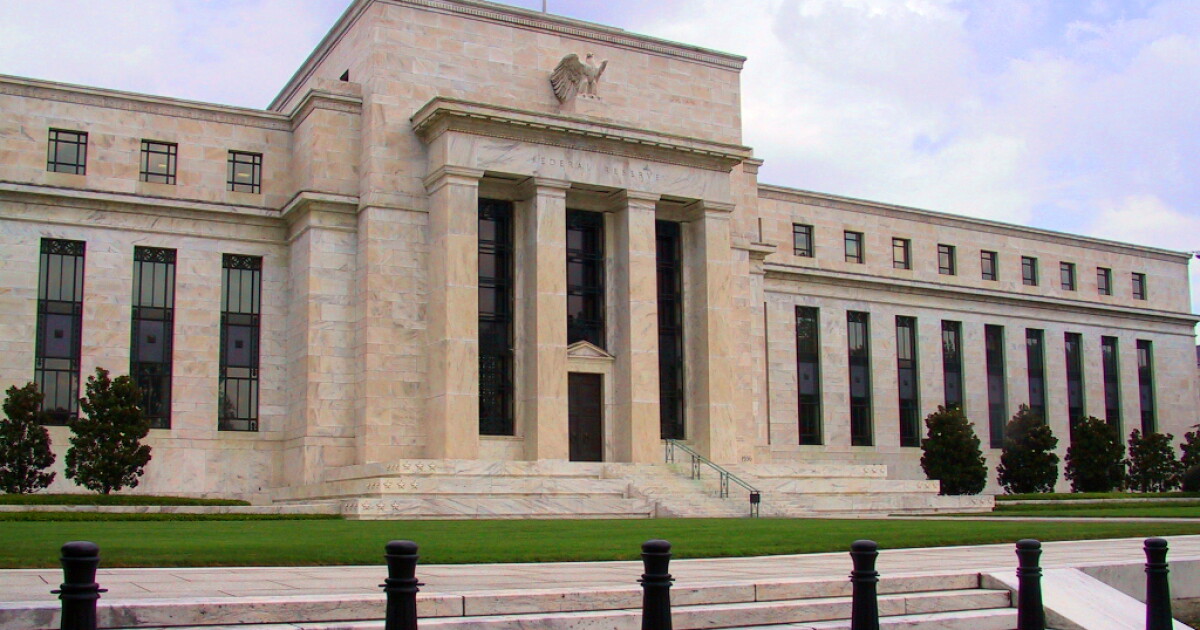
A federal case
I remember once a long time ago somebody telling me that the Federal Reserve was incredibly powerful. That the central bank’s officials could and did tilt the scales for or against politicians. If they didn’t like a president, they could raise rates. If they wanted an incumbent to stay incumbent, they could lower rates. This, I was told, happens regularly.
Processing Content
It was probably just a bit of Wall Street lore, but it does illustrate the kind of power the Fed has. The Fed can be incredibly influential in terms of how the economy operates, and that in turn has a direct effect on elections. And I’m quite sure that probably more than one president has been infuriated by central bank actions that undercut his future.
But they never did anything about it. The Fed’s independence was rightly seen as a cornerstone of the open U.S. market, which itself is the most important market in the global marketplace. The 10-year U.S. Treasury note is at the bottom of every asset class on the planet; everything gets priced off of it. Maintaining that solid edifice was more important than any one president’s present or future. Until Donald Trump. While he didn’t succeed in getting rid of either former Fed Chair Jerome Powell or Fed Gov. Lisa Cook, he pushed enough that there is a real question about just how independent the Fed will be in the future, as our Kyle Campbell explored yesterday.
I’m not going to get into the minutia of the Supreme Court cases that have created this mess. We’ve written plenty on them. The bottom line is we have a situation now where the president can fire anybody he wants, for any reason he wants — except for Fed officials. But even that isn’t so clearly defined. The Fed plays more than one role. It sets interest rates and controls monetary policy. But it also has a role as a regulator, and regulators are a class of employee that the Supreme Court said Trump could fire.
The upshot is that the Fed’s independence was upheld, in the short run. In the long run, absolutely any outcome is possible. The Fed may continue to operate as an independent agency. The president may use the Fed’s regulatory role as a wedge to wrest away its independence. The Fed could even conceivably be split up, with its regulatory and monetary-policy roles split.
Bank failures are surging! (Okay, no, not really)
Small Business Bank in Lenexa, Kansas, closed its doors for the last time on Friday, becoming the fourth bank this year to fail, as our Ebrima Santos Sanneh wrote. And it came just one week after the third bank failure of 2026. That is already twice as many bank failures as in either 2025 or 2024. But four compared to two is not really something to worry about. Even if two more banks were to fail this year, making it worse than 2023 when five banks failed, this would still be a historically low level of bank failures.
The FDIC has a good page on its website detailing the numbers by year going back to 2001. And the numbers are very low. There weren’t any failures in 2021 or 2022. Since 2014, there hasn’t been any year where more than eight banks failed (it happened in both 2015 and 2017). The last time there were a significant number of bank failures was in the lead-up to and wake of the financial crisis in 2008. Between 2008 and 2013, 489 banks failed. The worst single year was 2010, when 157 failed.
The past dozen-plus years have been extremely stable ones for the industry, one more bit of evidence that this is some kind of golden age of banking. It’s the kind of thing that should not be taken for granted. People can gripe about rules and regulations, bankers can look over at the risk takers in private credit with envy, presidents can fume and fulminate about central bankers. But, really, nobody should want to upset any part of this apple cart. It’s way too profitable for all involved. But you know somebody will. They always do. They already have.